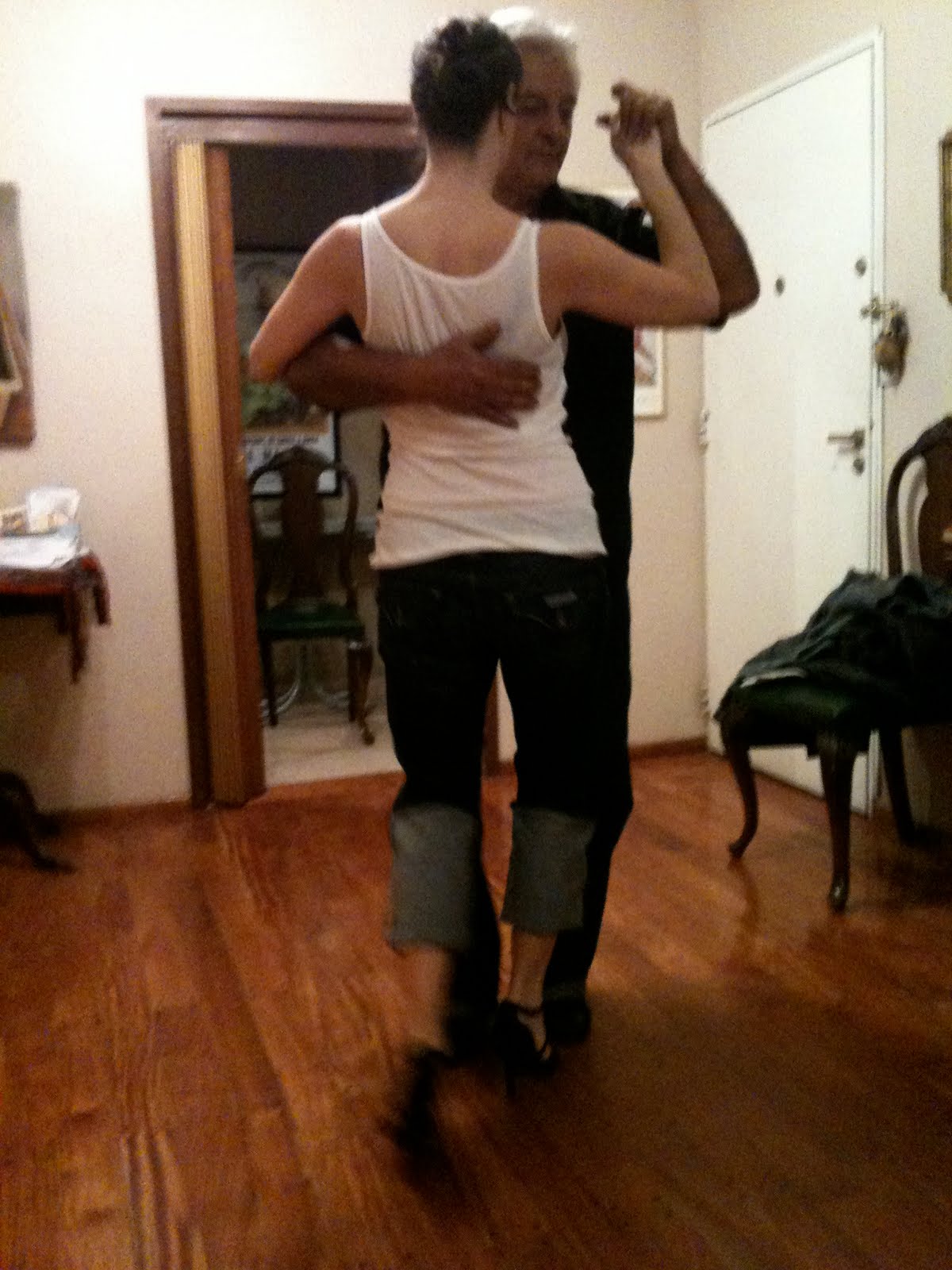
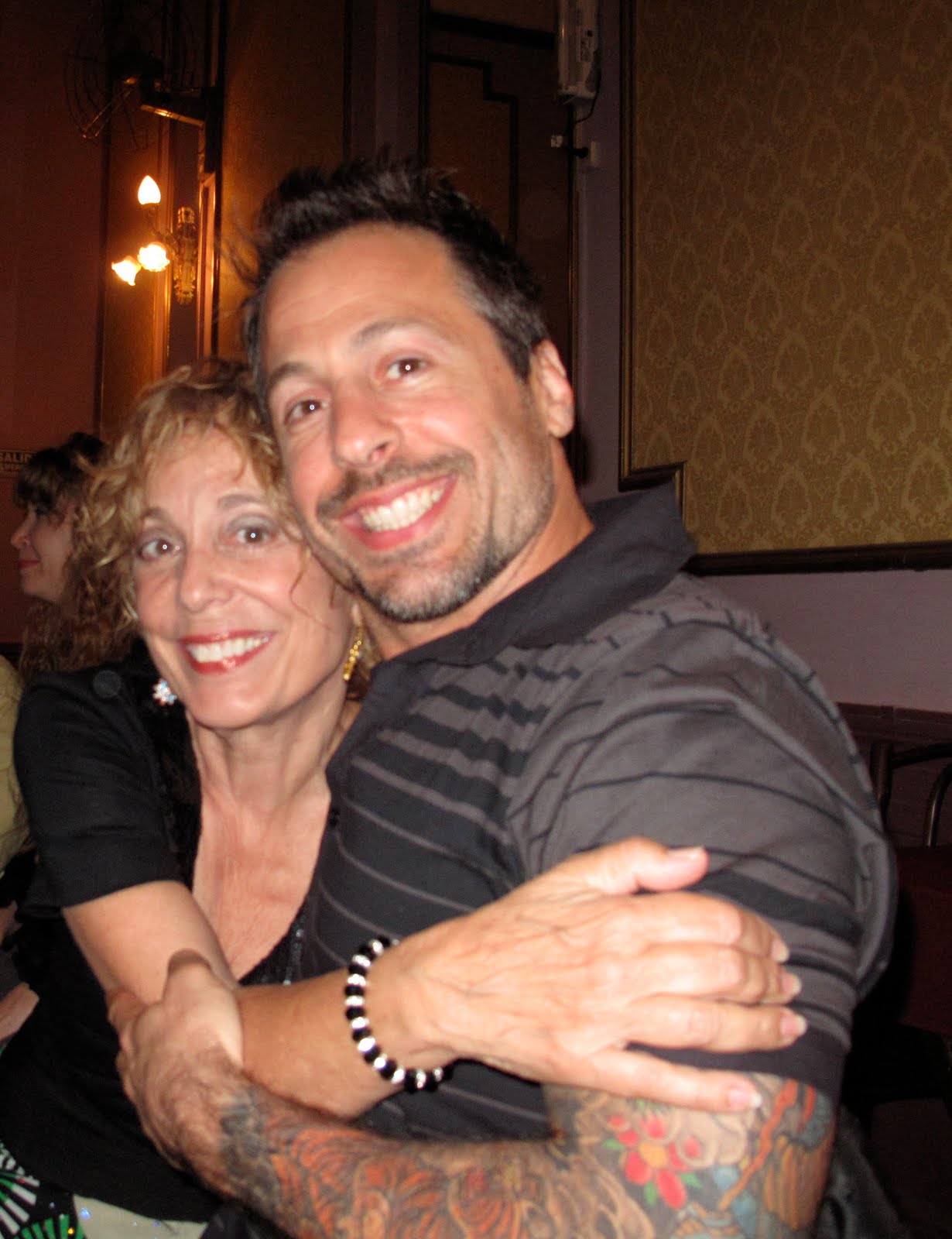
After eleven years living, dancing, teaching tango, and writing in Buenos Aires, I came home to L.A. in 2014, where I'm reconstructing my life.

Wednesday, April 28, 2010

10 Perfect Days in Buenos Aires

My son Jason and friend Connie just left after a 10 day visit. They had so much fun, and Ruben and me too, that more than just showing photos of "a great time with the kids," their itinerary would be fab vacation ideas for anyone visiting Buenos Aires. De todos modos, please indulge me.

Here are the highlights:


Airport Arrival


Empanadas--handmade


and exotic flavors delivered to our door


Tango Lessons


Shopping in the Gallerias Pacificas


and for Tango Shoes


Lunch at Cafe Tortoni with the Greats


Dancing at the Milonga de los Consagrados


Studying Castellano on the Terrace


A Day in La Boca and Caminito


A Tango Show at La Ventana


La Biela


Recoleta Cemetery


Feria de Mataderos


San Telmo


Ojo de bife by the river at Cabaña Las Lilas


Three Days in La Delta de Tigre


and Family Time


Sunday, April 25, 2010

Tourist Tango Shows in Buenos Aires


My introduction to Argentine tango dance (I was already familiar with some of the music) was, as with so many people outside of Argentina, via a touring tango show. Around 1988 I saw Tango Argentino with my late husband at the Pantages Theater in Hollywood.

Several years later I signed up for a series of eight Argentine tango lessons in West Hollywood taught by Linda Valentino. Immediately after completing the course, I went on a group tour to Buenos Aires, one of the very first of its kind, organized by Daniel Trenner. From then on I saw every tango show that came to town, my favorite being Forever Tango because of Gavito and the Sexteto Major. On that tour to BsAs in 1997, we went to a tango show in Michelangelo in San Telmo, and I was thrilled because the same stars of Tango Argentino I had seen in Los Angeles, Gloria y Eduardo Arquinbau (my neighbors here in Boedo in a marvelous alignment of the planets), headlined the show. During the tour we also had a group class with them in La Ideal.

But with the years and lots of experience, I came to realize that one tango show is more or less like another, especially to those who had no experience with what is the real tango. Nor does show dancing have anything to do with the social tango of Buenos Aires.

Folks are always asking me which tango show in Buenos Aires is the most "authentic!" And I reply honestly that none of them are. But some are better than others, depending on what you like. For me, the orchestra is the most important element, and the more bandoneones the better! Especially for tourists who never get the opportunity to hear this amazing instrument live.

When my kids came to town a couple of weeks ago, I faced the dilemma of choosing a show to take them to--it's all part of the tourist experience, right? Ruben and I were invited by students a few years ago to Esquina Carlos Gardel, and while there were several good things about it, the general impression was that the people are herded in and out like on an E Ticket ride at Disneyland: pose with the tango dancers, eat your dinner, buy the photos and videos, get out and board the bus before the next show.

I had heard that my fellow-blogger SallyCat took her parents to La Ventana and they loved it, so I contacted my friend Cesar at TangoTix and made the reservations. (It's a great website to compare and contrast the various tango shows, read reviews and purchase tickets.)


Our first course of ensalada Caprese

The dinner was good, although when Connie asked for some butter the waiter said there wasn't any.


What I liked best about La Ventana was the superb "D'Arienzo" orchestra with four bandoneones that played in the second half. There also was an excellent folklore quartet to finish off the first part, unusual for a tango show. The gaucho with the dynamite voleadoras had what the ten tango dancers did not: charisma and personality. He didn't dance the genuine "malambo" of the gauchos, but he gave a real performance and woke up the audience. (His name was also Ruben! Here he is with us after the show.)


The problem with the show's tango dancing was that each number had the same energy, same steps, the same frantic, robotic level. For me, despite the nailed spectacular final poses, they could all have phoned it in. Boring. There wasn't even the obligatory brothel scene in lingerie or humorous milonga number for variety, or even a vals! It was just fast tango after fast gancho/voleo/lift/spin in sexy gowns with no emotion or reason for being. The wardrobe, however, was gorgeous.

Some folks were critical of the Evita "Don't Cry for Me, Argentina" number--well it is a bit weird to include a London show tune--but I didn't mind all the flag waving. The male singer was excellent, the woman singer mas o menos.

But everyone looks for something different. I read on TripAdvisor that some folks loved the dancing and hated the folklore.

At night the front of La Ventana looks like a Criollo wedding cake, but despite the glamor of the lighting and flags, next door is an incredible old brick building that attracts more attention. I remembered this site at Balcarce 433 as the place of the Michelangelo Tango Show I attended in 1997. Now it's a Peruvian-Japanese restaurant named "M."! (Connie and I went in for a look-see and it's a gorgeous, sexy bar-restaurant, but almost nobody was there at midnight. A shame.)

La Ventana's impressive main show room was not too big and each table had a good view of the stage. All in all it was an enjoyable evening that was not too expensive, as these things go. The show was saved for Ruben and me by the folklore and the orchestra, but Jason and Connie liked the whole thing.

What do you think of tango shows? Do you attend them where you live? Do you go when in Buenos Aires? Which one was your favorite?

Saturday, April 10, 2010

The Best Students in the World


During a recent interview, a journalist asked me, Who is a typical student of Ruben y Cherie Tango Milonguero? What is the profile of the people who take lessons from you and Ruben and/or use your services?


My immediate reaction was -- anyone who wants to learn or improve their tango. Especially tango estilo milonguero.

But then I got to thinking about the hundreds of private students we've had over the years, and they do have two things in common.

First, they speak either English or Spanish.

Our students are from Viet Nam, India, Norway, Hong Kong, Japan, China, Nepal, Australia, England, Belgium, France, Italy, Greece, Cyprus, New Zealand, Slovenia, Germany, Brazil, Chile, Panama, Mexico, Italy, Pakistan, South Africa, Switzerland, Finland, Iceland...well that's off the top of my head. And of course local Argentinians and muchos Norteamericanos.

Where do they come from? Or rather, how do they find us? Generally it's from referrals, the internet, and from watching us dance in the milongas or on YouTube.

We've had very young-- a 21 year old girl from Hong Kong on a break from university--and retired folks (from lots of places.)

We've had well-to-do young couples on honeymoons and couples on retirement.

We've had total beginners and dancers of tango for 20 years, many who teach in their home countries.

We've had gay couples and gay solos.

We've had whole families and singles.

We've had long-married and newly divorced.

We've had parents with teenaged children.

We've had complete graduating classes from West Point and elementary teachers from San Diego, CA.

We've had "hippies" and trust-funders.

We've had doctors and house cleaners.

Who we haven't had are "assholes," excuse the expression.

The second commonality is the niceness and eagerness to learn of our students/clients; they are the best people in the world. How lucky are we? We usually stay in contact when they leave Argentina and we consider them friends. I like to think that the assholes who want to learn tango are drawn to the asshole teachers. Anyway, they don't come to us for whatever reason. Thank goodness.

We are blessed.

Tuesday, April 06, 2010

The Milonguero Way


I am a "professional" dancer because I teach tango and get paid for exhibitions. But I wouldn't be a pro here in Buenos Aires if it weren't for my partner. He is the draw. He is the Argentine who spent most of his life in the milongas, who lives and breathes and sings the tango. We work very well together, but if it weren't for me, he could also work well with someone else who has the same tango point of view.

Foreign dancers especially love getting to know a milonguero and hearing his stories and dance secrets that otherwise they wouldn't be able to do, particularly if they don't speak Castellano.

Ruben wasn't always a professional dancer; he used to work in television until the crisis of 2001. He was passionate about his job, traveled all over Argentina working, and danced tango every night for the love of it.

Now tango is his job. He earns his livelihood from tango. It's now more than pleasure; it's work--which he enjoys. He teaches, does taxi dancing, and gives historical Tango Tours of Buenos Aires.

Sometimes this puts him in a difficult situation with friends at the milongas we go to for enjoyment and socializing. (We also go to milongas for work when we do milonga accompaniment.)

Foreign women friends expect that Ruben will dance with them. Sometimes he does. But if not, sometimes they outright ask him to dance, which puts him in a bad place as it does with all milongueros. For one thing, milongueros don't like to be invited, nor do they want to refuse a lady, and for another, if he danced with all the women who wanted him to, what about me? What about our social evening together? We are at Los Consagrados or Chiqué to enjoy ourselves.

He will always dance one tanda with current students. It's part of their education and he likes to check their progress. And he will bend over backward to make sure our friends get their drink orders, are comfortable, and help them have a great time at the milonga.

But there are friends who expect dances with Ruben at the same time they are telling me they are taking classes at DNI, or El Beso, or expensive privates with Maximiliano Superstar. They ask me to "tell" Ruben to dance with them! Ruben owns his own dance. (I do not give him orders.) Read more here.

They expect him to give it away for free. They forget that the tango is what he has to sell.

Do these same people ask for free consultations from doctors and lawyers at social gatherings back home?

Ruben is a low-profile real milonguero, not a stage dancer who tours the world giving classes and making a big name for himself. He's in Buenos Aires every week of the year dancing in the milongas, as he's done for the past 30 years. All the women want to dance with him and all of the men want to dance like him. But he is a professional. Friendly, affable, funny, and fun as well. And available for classes and milonga accompaniment.

I wish the women would remember that at the milongas.

Sunday, April 04, 2010

Milonga La Nacional


From left, Sally, Keith & Sunshine from Hong Kong, and me.


As readers of tangocherie know, our habitual milonga was closed last night for an annual members' event of the Club Region Leonesa. We decided to check out the recently reopened La Nacional, held in the Club Italiano (Alsina 1465), one block from the Casa Galicia where Nuevo Chique is held on Tuesdays and Thursdays.

It was weird, after so many years of always being at Los Consagrados Saturdays, it was almost as if the car wouldn't go anywhere else! But you know, it's good to once in a while to upset the apple cart and change the same ole'same'ole. And we had a fantastic time. Thank you Roque y Juan, for the great table, for the wonderful ambiance, for taking up the slack, as it were. And indeed, by the time we left at midnight, there was standing room only. The aficionados of Los Cons were crammed in with the Nacional regulars and some well-known folks such as Mimi Santapa, Graciela Gonzalez, Enriqueta Kleinman at the table next to ours.

Saturday, April 03, 2010

Expatriate Holidays


Today is Easter Sunday. It seems like a quiet Sunday like all the rest. But it's on days like these that I miss my hometown and old life the most.

Easter morning in the olden days, there were egg hunts, church, and then a traditional lunch of baked ham or leg of lamb.


Easter Tree somewhere in Germany


All of that is literally and figuratively a world away. As an expatriate for ten years, I've spent many holidays alone and in other countries. But it doesn't get any easier.

Even when it falls in autumn and the days are growing shorter and the earth is getting ready to sleep, Easter is still the season of hope. I'm looking forward to the visit of my son Jason next week; now if only he could bring a honey-baked ham!

Not Just Argentine Tango Anymore...


The other night I observed something scary at a traditional milonga. For years foreigners have been landing in Buenos Aires and trying to do their fancy stage steps at milongas; that's what their local teachers, Argentine or not, have been teaching to popular demand. Tango shows tour the world and are on TV, so in other countries, "Argentine tango" is "stage tango" with lots of ganchos, volcadas, high voleos, and saltas. Then dancers come here and have to learn to walk, keep their feet on the floor, and to do navigational floorcraft, often for the first time. Milongueros wouldn't permit their partners to do adornos and leg wraps. And how foreign ladies love to do adornos!

Local tangueros have always enjoyed dancing with the tango tourists who descend seasonally on Buenos Aires. It's a change, different energy, with always the hope of a invitation to visit them in their home country, a quick aventura, or at the very least, a dinner invitation to a nice restaurant.

But now some of the porteños and porteñas want to learn the tango that the foreigners bring with them! Oh lackaday! In Nuevo Chique last week I saw an old milonguero dancing with a young foreign woman and leading her into big sweeping moves never seen on that dance floor outside of a performance. There was no room to dance that way, and he didn't do it well. But I could tell he was trying to keep up with what tango tourists liked to dance. Since then, a friend told me that a milonguero she knows is taking lessons from young teachers to learn the moves popular with foreigners.

To me, it can be a vicious circle of watching, teaching, learning, dancing show-off tango instead of emotional, connected, musical, improvised tango. A slippery slope.

While not in Chique but in a milonga in Brazil, here is a video of an older man dancing to Tango for Evora; I can't help but feel how much happier he and his partner would be dancing to Calo in estilo milonguero, where the music is king and the embrace is the thing. Still, the important point is that they are dancing!


(Painting above by Jan Rae.)